05 - Spring Bean Lifecycle
Customizing the Bean Lifecycle
Spring allows you to execute custom logic during the Bean lifecycle, such as:
- Execute code after the Bean has been initialized
- Execute code before the Bean is destroyed
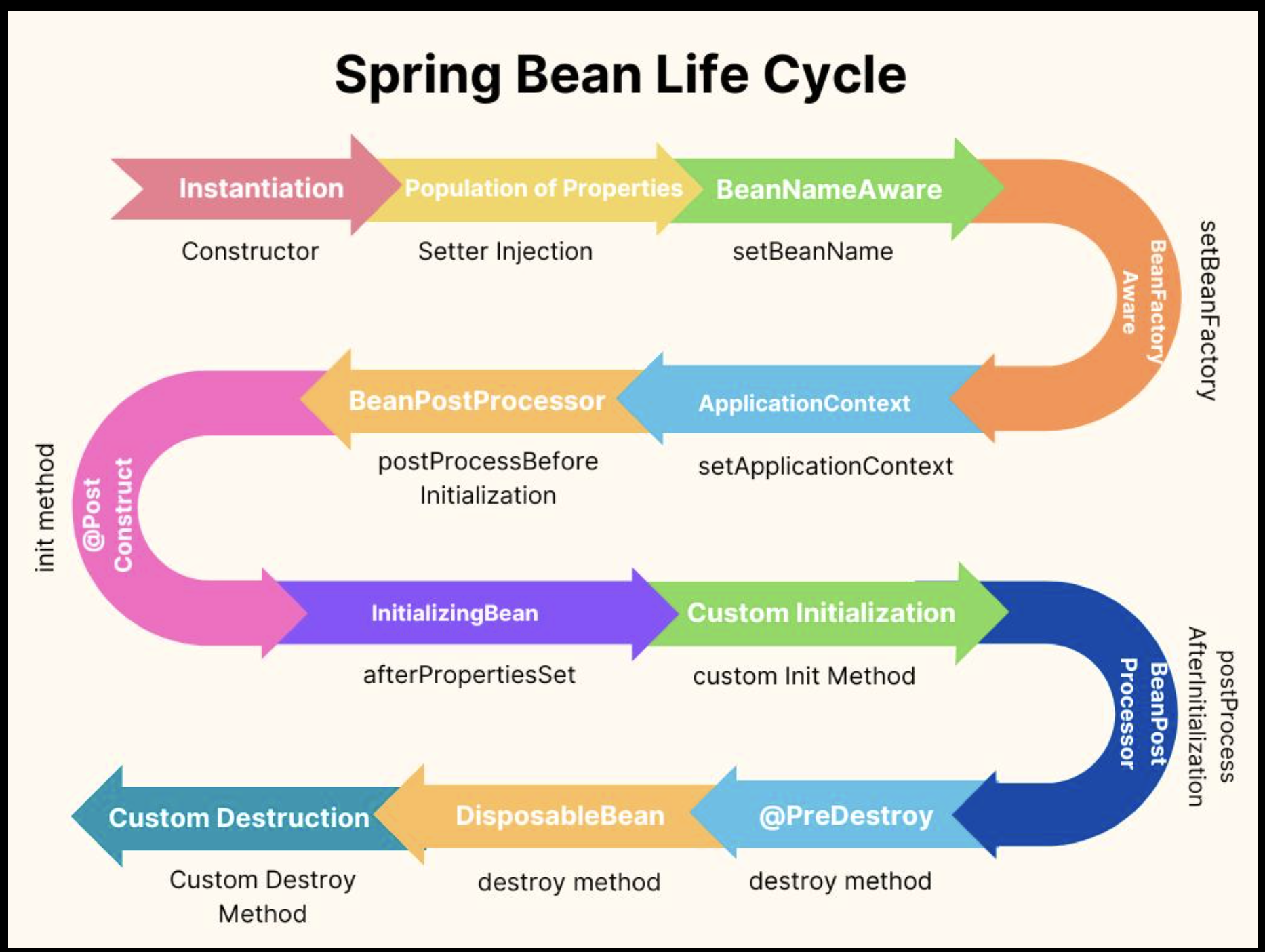
Initialization Callbacks
@PostConstruct annotation
The method is executed after all dependencies have been injected.
new DatabaseService()
↓
Dependency Injection
↓
@PostConstruct
@Component
public class DatabaseService {
@PostConstruct
public void init() {
System.out.println("Connecting database...");
}
}InitializingBean
InitializingBean is a Spring lifecycle interface. The afterPropertiesSet() method is called after all Bean properties have been set.
@Component
public class CacheService implements InitializingBean {

  @Override
  public void afterPropertiesSet(){
    System.out.println("Cache initialized");
  }

}
@PreDestroy annotation
When the ApplicationContext is closed, Spring invokes methods annotated with @PreDestroy before destroying the Bean.
Typical use cases include:
- Closing database connections
- Releasing resources
- Stopping background threads
@Component
public class ConnectionPool {

  @PreDestroy
  public void shutdown() {
    System.out.println("Closing connections");
  }
}
DisposableBean
DisposableBean is a Spring lifecycle interface. The destroy() method is invoked before the Bean is removed from the container.
@Component
public class Worker implements DisposableBean {

  @Override
  public void destroy(){
    System.out.println("Stop worker threads.");
  }

}
Best Practice
In most Spring Boot applications, prefer using
@PostConstructand@PreDestroyover implementingInitializingBeanandDisposableBean, as annotations keep your classes less coupled to the Spring Framework.